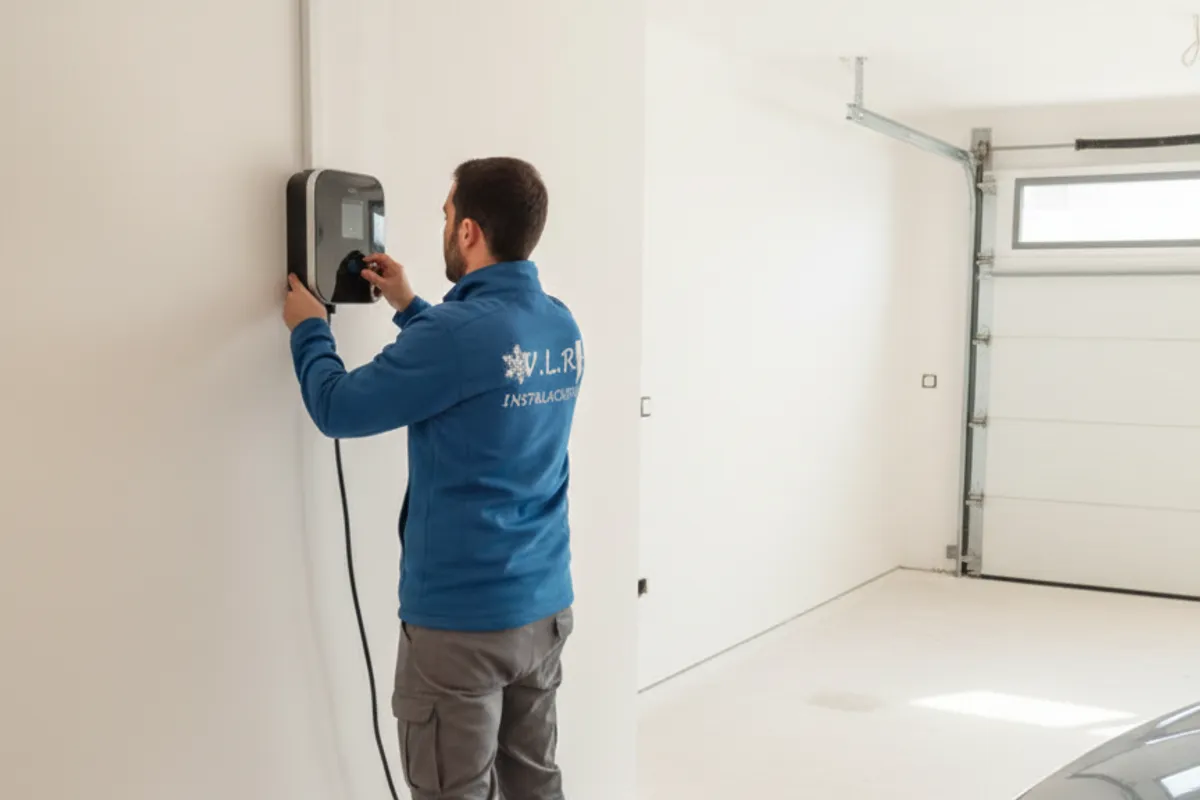
Wondering how much it costs to install an EV charger at home in Spain? The typical price in the Málaga area ranges from €700 to €1,500 for a standard installation. Simple cases can start from around €300, while complex installations in communal garages can exceed €3,000.
If you're an expat on the Costa del Sol, navigating electrical installations in Spain can feel daunting. This guide explains what affects the price, what's included, and how to take advantage of Spanish government grants that many foreign residents don't know about.
Factors that affect the price
The cost of installing an EV charger varies significantly depending on your situation. Here are the main factors:
1. Charger power level
The power rating determines charging speed and affects both equipment and installation costs:
- 3.7 kW (single-phase): Basic option, sufficient if you charge overnight and don't drive long distances daily
- 7.4 kW (single-phase): The most popular choice for home use. Charges an average EV in 6-8 hours
- 11 kW (three-phase): For those needing faster charging or with large-battery vehicles
- 22 kW (three-phase): Maximum domestic power, requires three-phase supply and higher contracted power
2. Distance from the electrical panel
This is often the biggest factor affecting price in home installations. Every metre of cable, trunking, and labour adds up:
- Less than 10 metres: Simple, economical installation
- 10-25 metres: Moderate cost, typical situation
- More than 25 metres: Significant increase in materials and labour
3. Type of parking
Private garage: The simplest installation. The consumer unit (cuadro eléctrico) is usually nearby, and you don't need special permissions.
Communal underground parking: More complex. Typically involves running cable from your flat or from the building's main supply, passing through common areas. Requires notification to the community and compliance with regulations for communal areas.
4. Condition of your electrical installation
If your consumer unit is old or doesn't have sufficient capacity, you may need to:
- Add a dedicated circuit with its own MCB (circuit breaker) and RCD
- Increase your contracted power with your electricity supplier
- Upgrade the consumer unit if it's outdated
5. Type of charger
- Basic charger: Functional and reliable, no connectivity. From around €300 for the unit
- Smart charger: With WiFi, mobile app, scheduled charging, and consumption monitoring. From around €500 for the unit
Price examples by scenario
To give you a realistic idea, here are typical price ranges we see across Málaga province:
Simple case: €300 – €700
- Private garage with consumer unit nearby (less than 10 m)
- Electrical installation in good condition
- 7.4 kW single-phase charger
- No building work required
Standard case: €700 – €1,500
- Medium distance from consumer unit (10-20 m)
- Cable trunking or conduit required
- Possible addition of new circuit to the panel
- 7.4 kW charger with complete installation
Complex case: €1,500 – €3,000+
- Communal garage with long cable run (30+ metres)
- Routing through common areas, risers, or external walls
- Building work (chasing walls, flush-mounted trunking, drilling)
- Possible need to upgrade panel or increase contracted power
These prices include the charger, materials, and labour. The boletín eléctrico (electrical certificate) has an additional cost if required for your installation.
Spanish grants: Plan MOVES III
Here's something many expats don't know about: the Plan MOVES III programme in Andalucía offers substantial grants for private individuals installing EV charging points.
The subsidies can cover 70% to 80% of installation costs, depending on your municipality (smaller towns under 5,000 inhabitants get higher percentages).
The main requirements are:
- Own an electric vehicle or have one on order
- Installation carried out by an authorised company
- Charger power between 3.7 kW and 22 kW
- Application submitted within the funding period
The application process involves Spanish bureaucracy that can be challenging for non-Spanish speakers. We can help you with the paperwork so you don't have to navigate it alone.
Why hire an authorised installer in Spain?
Installing an EV charging point isn't a DIY job. There are important reasons to use a professional:
Safety: An EV charger draws significant power for extended periods. A poorly designed installation can cause overheating, constant RCD trips, or in the worst case, fires.
Regulations: The installation must comply with the REBT (Spain's Low Voltage Electrical Regulations) and ITC-BT-52 specifically covering electric vehicle charging. The new REBT 2026 updates protection requirements, mandating type A RCDs (instead of type AC) for charging points.
Electrical certificate: For significant modifications to the installation, an official boletín eléctrico (electrical installation certificate) may be required.
Warranty and insurance: An authorised installer provides a guarantee on the work and is covered by liability insurance.
Community requirements: In communal garages, the community of owners may require that an authorised professional carries out and certifies the installation.
Installing in a communal garage
If you live in a flat with communal parking, you have the legal right to install your own charging point. Spanish law (the Ley de Propiedad Horizontal) has protected this right since 2019.
What you need to do:
- Notify the president or administrator of your community in writing
- The community has 30 days to respond. If they don't, it's considered accepted
- The community cannot prohibit installation if it meets regulations
- You pay for the installation and your electricity consumption
The installation can be done from your own electricity meter (running cable from your flat) or from a dedicated meter in the garage. We can advise on the best option for your situation.
Don't be put off by concerns about dealing with your comunidad de propietarios. The law is clearly on your side, and most communities accept installations without issue once they understand the regulations.
Frequently asked questions
Can I install an EV charger in a communal garage in Spain?
Yes, Spanish law (Ley de Propiedad Horizontal) protects your right to install a charging point. You only need to notify the community of owners-you don't need their approval. You pay for the installation and electricity consumption.
Do I need permission from my community of owners?
You don't need permission, but you must formally notify the president or administrator in writing. The community cannot refuse if your installation meets regulations.
How long does the installation take?
A standard installation is completed in one working day. More complex cases with long cable runs or building work may take 2-3 days.
What charger power do I need for my electric car?
For typical home use, a 7.4 kW charger is sufficient for most drivers-it fully charges an average EV in 6-8 hours (overnight). If you have a vehicle with a large battery or need faster charging, consider 11 kW or 22 kW.
Can I apply for the MOVES III subsidy as a foreign resident?
Yes, the Plan MOVES III subsidies are available to all residents in Spain, regardless of nationality. You can receive 70-80% of installation costs back. We can help you navigate the Spanish paperwork.
Need a quote?
Every installation is different. The only way to give you an accurate price is to understand your situation: where your consumer unit is located, the distance to your parking space, and the condition of your current installation.
If you live in Málaga, Marbella, Fuengirola, or anywhere on the Costa del Sol, we can visit to assess your property with no obligation. We've been installing electrical systems across the province for over 20 years.
Visit our EV charger installation page or give us a call. We're happy to answer your questions in English.