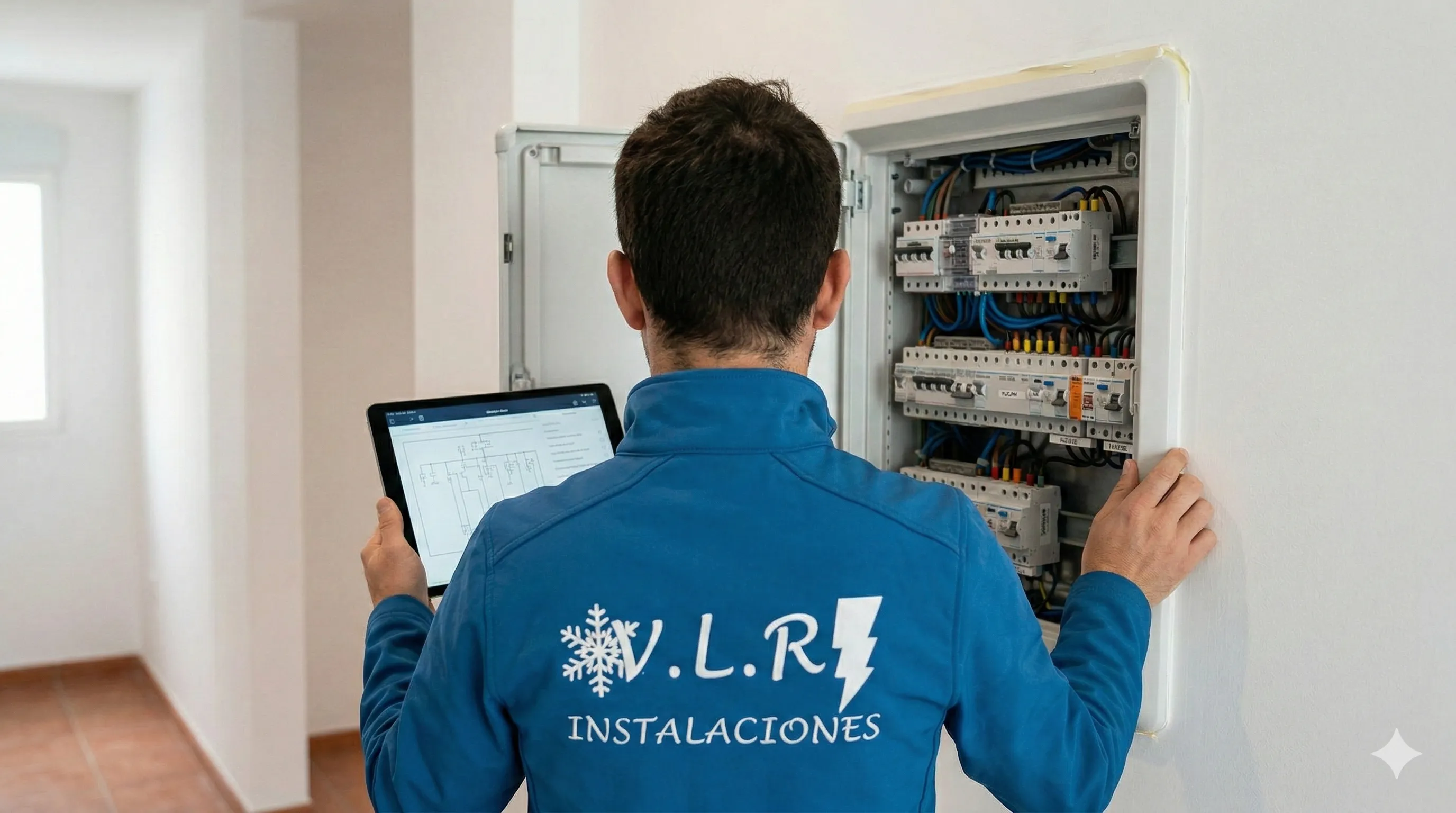
Spain's Low Voltage Electrical Regulations (REBT) are about to receive their first major update since 2002. That's right — the same electrical rules have been in place for over 20 years, and that's about to change. The new REBT 2026 is expected to be published in the BOE (Spain's Official Gazette) during the first half of this year, bringing significant changes that directly affect homes, businesses, and communities of owners across Málaga.
Don't worry — you won't have to rip out your installation and start from scratch. But there are things worth knowing now to avoid surprises later. We'll explain it clearly, without unnecessary jargon.
What is the REBT and why does it matter?
The REBT (Reglamento Electrotécnico de Baja Tensión) is the regulation that governs how all low-voltage electrical installations in Spain must be designed, installed, and maintained. In other words, the electricity in your home, shop, or office. Every socket, every RCD, every cable must comply with this regulation.
The problem is that the current REBT dates from 2002. Back then, there were no rooftop solar panels, no EV chargers in garages, and many of the electronic devices we use daily simply didn't exist. Technology has moved on significantly, and the regulations needed to catch up.
The most important changes in the new REBT 2026
The update is being applied in phases. The first phase is well advanced and contains the most relevant day-to-day changes. Here are the ones most likely to affect you:
1. Type AC RCDs are being banned
This is probably the change with the biggest impact on homes. Type AC RCDs (residual current devices) — the kind fitted in most electrical panels across Spain — will be prohibited in residential and commercial installations. Instead, type A RCDs (or higher) will be mandatory.
Why? Because type AC RCDs only detect pure alternating current leakage. But today, with phone chargers, induction hobs, variable frequency drives, and electric vehicle chargers, many appliances generate DC components that a type AC RCD simply cannot detect. A type A RCD can detect these, meaning genuinely better safety in your home.
There will be a two-year transition period from publication of the new REBT, but the sooner you upgrade your consumer unit, the sooner you're properly protected.
2. Mandatory surge protection
Until now, installing surge protectors in a home was a recommendation, not a requirement. Under the new REBT, protection against transient and temporary overvoltages will be mandatory in all new installations, without needing a prior risk assessment.
This is particularly relevant in parts of Málaga where electrical storms can cause voltage spikes that damage appliances, IT equipment, or even your solar panel installation. A surge protector in the consumer unit prevents those nasty surprises.
3. New regulations for solar and DC installations
The new REBT introduces for the first time a specific technical instruction (ITC-BT-53) dedicated to DC (direct current) installations, with particular attention to photovoltaic systems. Until now, these installations were only partially regulated through technical recommendations.
If you already have solar panels on your property or are thinking about installing them, this matters. The new regulations establish mandatory criteria for the design, installation, and protection of these systems. A type A RCD (at minimum) is also expected to be required on the photovoltaic generator circuit, although this specific point is still under discussion in the final draft.
The same applies if you have or are planning to install battery storage — DC installations will now have a clear regulatory framework.
4. Mandatory maintenance for certain installations
Another important change: certain electrical installations will need a mandatory maintenance contract. This mainly affects installations that require a technical project (such as commercial premises, communities of owners, or installations above a certain power threshold).
Periodic inspections will include checks on the earthing system, verification of protective devices, and general condition of the installation. The aim is for installations to remain safe throughout their entire service life, not just on the day they're installed.
5. Broader scope: repairs and at-risk installations
The current REBT mainly applies to new installations and their extensions. The new regulation goes further: it will also cover repairs and any existing installation considered to present a serious risk.
This means that if you have a very old installation — for example, a property from the 1970s or 80s in central Málaga with deteriorated wiring — it could fall within the scope of the new regulation and require upgrading.
How does this affect you in Málaga?
Across Málaga province there are thousands of homes with electrical installations that are 30, 40, or even 50 years old. Many still operate with type AC RCDs, without surge protection, and with inadequate earthing.
Here are the most common scenarios where the new REBT could directly affect you:
- Buying or selling a property: you'll need a boletín eléctrico (CIE) certifying that the installation complies with current regulations. Under the new REBT, the requirements will be more demanding.
- You have or want solar panels: the new ITC-BT-53 will specifically regulate your self-consumption installation.
- You have or are installing an EV charger: protection requirements for charging points are being updated with safer RCDs.
- Your installation is old and showing problems: if there are signs of serious risk, the new REBT allows intervention even on existing installations.
- You own commercial premises: you'll likely need a mandatory electrical maintenance contract.
What can you do now?
You don't need to wait for the new REBT to be published to take action. In fact, getting ahead of it is the smart move. Here are our recommendations:
Check your consumer unit. Are your RCDs type AC? If so, plan to replace them with type A. It's not complicated or especially expensive, and it significantly improves safety.
Consider installing surge protection. Even though it's not yet mandatory for existing installations, a surge protector is relatively inexpensive and can save you thousands of euros in damage to electronic equipment.
If your installation is over 20 years old, get it inspected. An authorised electrician can assess your installation and tell you if it needs updating to comply with the new regulations. Better to find out now than when you need the electrical certificate.
If you have or plan to install solar panels, make sure everything is in order. The new DC regulations will be demanding. A properly done installation from the start will save you problems down the line.
Frequently asked questions about the new REBT 2026
When does the new REBT come into effect?
The first phase of the update is expected to be published in Spain's Official Gazette (BOE) during the first half of 2026. After publication, there will be transition periods for some requirements, such as a two-year deadline for replacing type AC RCDs.
Will I have to change my entire electrical installation?
Not necessarily. The new REBT mainly applies to new installations, extensions, and repairs. However, if your installation poses a serious risk, it could fall within the scope of the new regulations. We recommend getting a professional inspection.
How much does it cost to replace a type AC RCD with a type A?
Replacing a type AC RCD with a type A typically costs between €150 and €300 (parts and labour), depending on your consumer unit. It's a small investment compared to the safety improvement it provides.
Does it affect me if I already have solar panels?
If your solar installation was done correctly and complies with current regulations, you shouldn't have problems. However, it's worth having it checked to ensure it meets the new protection requirements, particularly regarding the RCD on the generator circuit.
Is mandatory maintenance required for my home?
Mandatory maintenance contracts are mainly expected for installations that require a technical project, such as commercial premises or larger installations. A standard home won't require one, although regular inspections are still highly recommended.
Need your installation checked?
At VLR Instalaciones, we've been working with electrical installations across Málaga province for over 20 years. We're authorised by the Junta de Andalucía and know both the current regulations and the upcoming REBT changes inside out.
If you want to know whether your installation is ready for the new regulations, or you need to upgrade your consumer unit, get in touch for a no-obligation assessment. We'll tell you exactly what you need and what it will cost — no surprises.