Potencia contratada (contracted power) is one of those things that sits on your electricity bill and almost nobody checks. That's a mistake, because getting it wrong can cost you money every month, or leave you in the dark every time you switch on a few appliances at once. Here's what it is, how to tell if yours is right, and how to change it.
What is contracted power?
Contracted power (measured in kilowatts, kW) is the maximum amount of electricity you can draw at any one time in your home. The more power you contract, the more appliances you can run simultaneously, but the more you pay in the fixed part of your bill.
It's important to understand that you pay for contracted power whether you use electricity or not. It's a fixed charge: even if you're away for a whole month, you still pay for the power you have contracted.
The most common values
In homes, the most common power levels are:
- 3.45 kW: small homes or those with few high-consumption appliances.
- 4.6 kW: the most common in mid-sized flats.
- 5.75 kW: homes with an induction hob, air conditioning in several rooms, or higher consumption.
- 6.9 kW or more: villas, large homes, or homes with an EV charger.
Do you have the right power?
There are two situations worth reviewing:
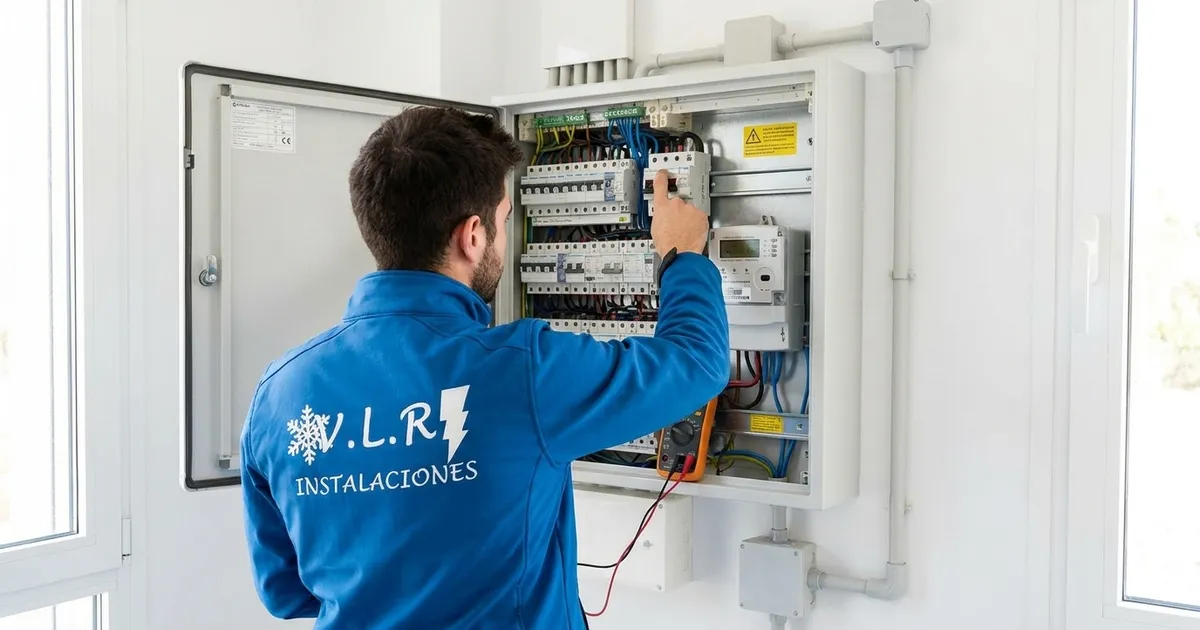
Too low (the power keeps tripping). If the lights go out every time you run the oven, the hob and the air conditioning together, your contracted power is too small. What trips is the main control switch (ICP), which cuts the supply when you exceed your contracted limit. It's a very common problem, and we also cover it in our article on why your air conditioning trips the electricity.
Too high (you're overpaying). The opposite case, and more common than you'd think. Many homes have far more power contracted than they actually need, sometimes inherited from the previous owner. If the power never trips no matter how much you switch on, you can probably lower it and save on every bill.
How to change your contracted power
You request the change from your energy supplier (comercializadora, the company that bills you). You can do it by phone or through your online account. The key points:
- You can change the power once every 12 months with no penalty.
- Lowering the power is usually quick and simple.
- Raising the power may require upgrading your installation: above certain limits you'll need a suitable consumer unit and, sometimes, an updated boletín eléctrico (electrical certificate).
When is it worth raising the power?
Some situations almost demand more power to live comfortably:
- Installing air conditioning in several rooms. See our air conditioning service.
- Switching to an induction hob, which draws a fair amount.
- Installing an EV charger, which can need several extra kW.
In these cases, before raising the power, check that your installation supports it. There's little point contracting more power if the consumer unit or wiring isn't ready for it.
An EV charger does not always mean more power. A charge point with dynamic load management watches what the house is drawing and slows the car when the oven or the AC comes on, so many homes charge overnight without raising the contract. We size this when we fit your EV charger; the running costs are in what it costs to charge an electric car at home.
Frequently asked questions
How do I know my contracted power?
It appears on your electricity bill under power (potencia), in kW, and in your supplier's online account. The most common household values are 3.45 kW, 4.6 kW and 5.75 kW.
How often can I change my contracted power?
Once every 12 months with no penalty. Lowering it is usually straightforward; raising it may require upgrading the ICP or the electrical certificate if you go above certain limits.
What happens if my contracted power is too low?
If you switch on more appliances than your power allows, the main control switch trips and you lose power. That's what happens when you run the oven, hob and air conditioning at once.
Can I save money by lowering my contracted power?
Yes. The power term is a fixed charge you pay whether you use electricity or not. If you have more than you use, lowering it reduces your bill every month.
Do I need an electrician to change my power?
You arrange it with your supplier, but if you raise the power beyond what your installation supports you may need to upgrade the consumer unit and get an updated certificate. A licensed electrician can confirm this.
Unsure about your power or your consumer unit?
At VLR Instalaciones we can check your consumer unit and tell you what power your installation supports before you make changes with your supplier. Call us for no-obligation advice.