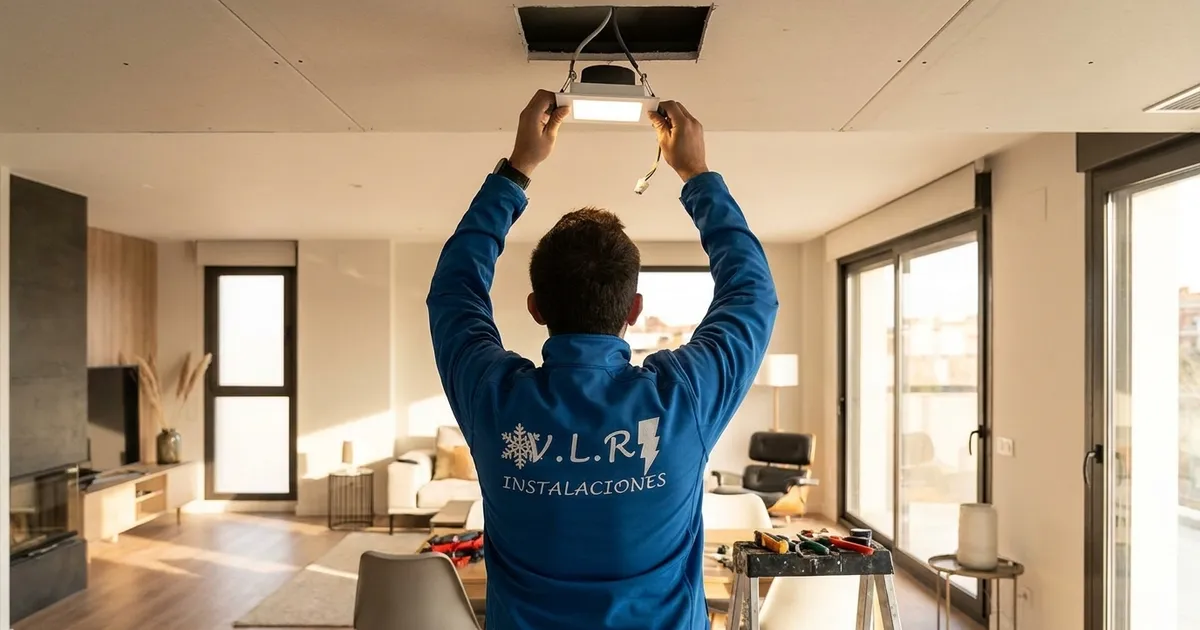
Switching your home's lighting to LED is one of those upgrades that pays for itself. People talk about savings of up to 80% on the lighting part of the bill, and it's no exaggeration. Let's look at the real saving with numbers, how long it takes to pay off, and what's worth changing first.
How much LED really saves
The key is the power used to produce the same amount of light. Comparing equivalent bulbs:
- A 60 W incandescent equals an LED of about 8-9 W: a saving of nearly 85%.
- A 50 W halogen (the typical recessed downlights) equals an LED of about 5-7 W: around 85-90% less.
- A fluorescent tube is replaced by an LED tube using roughly half the power.
The real saving in euros depends on how many light points you have and how many hours you use them, but in a home with plenty of lamps and downlights, the change is clearly noticeable on the bill.
How long does it take to pay off?
The rule is simple: the more hours a light is on, the sooner changing it pays off. So it's best to start with the lights you use most:
- Living room and kitchen, where you spend most time.
- Recessed halogen downlights, which use a lot and burn out often.
- Outdoor, garage or communal lighting, sometimes on for many hours.
These usually pay back the change within a few months. After that, it's all saving.
Beyond the savings
Cutting the bill is the headline, but LED has more going for it:
- They last far longer: a quality LED can last years, so you forget about constantly changing bulbs.
- They give off less heat: important in summer and with recessed downlights, where halogens run hot.
- Instant on and good light quality.
- Dimmable: many models can be dimmed to set the mood.
What to look for when choosing LED
Not all LED lighting is the same, and cheap can turn out expensive. Look at:
- Colour temperature: for the home, warm light (2,700-3,000 K) feels cosier; cool (4,000 K or more) suits work areas.
- Colour rendering index (CRI): the higher it is, the more faithfully colours appear.
- Dimmer compatibility: if you have a dimmer, make sure to use a compatible dimmable LED, or it will flicker.
If you're renovating all the lighting in the house, it's a good moment to also check the consumer unit and get everything in good shape.
Frequently asked questions
How much do you save by switching to LED lighting?
An LED uses 80-90% less than an incandescent and around 50% less than a halogen for the same light. In a home with many light points, the saving is significant.
How long does the switch to LED take to pay off?
The lights on for the most hours (living room, kitchen, outdoors) usually pay back within a few months. After that it's all saving, and they last far longer too.
Is it worth changing recessed halogen downlights?
Yes, one of the most cost-effective changes. They use a lot and burn out often. Replacing them with LED cuts consumption and heat and almost ends bulb changes.
Is all LED lighting the same?
No. Look at colour temperature (warm, around 2,700-3,000 K, for the home), a good CRI, and, if you use dimmers, that it's a dimmable LED compatible with your dimmer.
Want to switch to LED?
At VLR Instalaciones we upgrade the LED lighting of homes and business premises across Málaga province, choosing the right temperature and type of light for each room. Ask us and we'll tell you how much you can save.