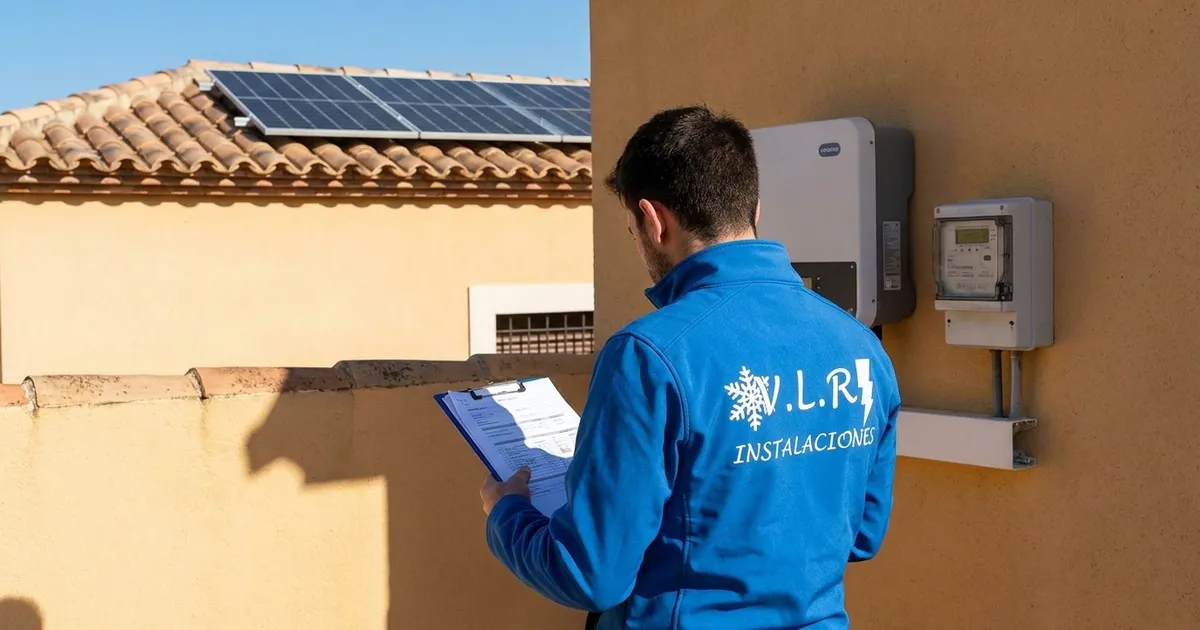
Installing solar panels is the easy part. What causes the most confusion is the paperwork: registering the installation and activating surplus compensation. It sounds bureaucratic, but taken step by step it's simpler than it looks. Here it is in plain English, no small print.
What does registering self-consumption mean?
If your solar system is connected to the grid (the vast majority of homes), registering it is mandatory. Registration means the installation is formally declared and recorded with the administration and the electricity company, so it's legal, safe, and you can benefit from surplus compensation.
Skipping it has consequences: you won't be able to offset the energy you feed back to the grid, and in the event of an inspection you risk penalties.
The paperwork, step by step
These are the usual steps for a home self-consumption system in Andalucía:
- 1. Technical report or project. Technical documentation for the installation. For low-power homes a report usually suffices; above a certain power a project signed by a competent technician is required.
- 2. Electrical installation certificate (CIE). The boletín issued by the licensed installer after completing the work.
- 3. Self-consumption registration. Registering the installation with the relevant Junta de Andalucía register.
- 4. Notification to the distributor. The distribution company is informed of the new self-consumption installation.
- 5. Compensation contract. You sign the agreement with your supplier (comercializadora) that activates surplus compensation on the bill.
A licensed installer handles almost all of this for you; it's part of the service when you install solar panels with a reputable company.
How surplus compensation works
This is the part everyone cares about. The idea is simple:
- During the day your panels produce energy. What you use at that moment is free (self-consumption).
- The energy you produce and don't use is fed back to the grid.
- Your supplier compensates that exported energy by discounting it from your bill.
One important nuance: the compensation can't exceed the cost of the energy you consumed in the same period. In other words, your energy bill can reach zero, but not go negative. You aren't paid for producing more than you use; you simply don't pay for energy that month. That's why, to squeeze the most from self-consumption, many homes add a battery storage system, a topic we analyse in is a solar battery worth it?.
What if I already have unregistered panels?
It's more common than you'd think, especially with older or self-installed systems. The good news is that it can be regularised. A licensed installer checks the installation meets current regulations, corrects whatever's needed, issues the documentation and handles registration. Until it's registered you can't claim surplus compensation, so the sooner the better.
Frequently asked questions
Is registering solar panels mandatory?
Yes, if your system is grid-connected. It's required for the installation to be legal, to qualify for surplus compensation, and to avoid penalties. Off-grid systems have different requirements.
How does surplus compensation work?
The energy you produce and don't use is fed to the grid, and your supplier discounts it from your bill. The discount can't exceed the cost of the energy consumed in the period: the energy bill can reach zero, but not go negative.
How long does registration take?
The technical part is quick, but registration and activating compensation can take several weeks. The total usually ranges from a few weeks to a couple of months.
I already have unregistered panels, what do I do?
It can be regularised. A licensed installer checks it meets regulations, issues the documentation and handles registration. Until registered, you can't benefit from compensation.
Do I need an engineer's project?
For low-power homes a technical report usually suffices; a signed project is required above a certain power. A licensed installer will tell you what your case needs.
Need to register your solar installation?
At VLR Instalaciones we install and register solar panels across Málaga province, and we also regularise systems you already have installed. We handle the paperwork from start to finish so you can start offsetting surplus as soon as possible.